Bangladeshi families today carry a weight that previous generations rarely faced alone. Both parents work full-time. Adult children live hours away from aging parents. Hospitals discharge patients faster than ever. In this reality, a professional care giver in Bangladesh has stopped being an option and started being a necessity. This guide explains what professional caregiving actually looks like, who needs it, how to find the right person, and why the decision matters more than most families realize.
The Shift Happening Inside Bangladeshi Homes
Nuclear Families Are Changing Everything
Thirty years ago, most Bangladeshi households operated as extended family units. Grandparents lived with their children and grandchildren. Caregiving happened naturally, distributed across multiple family members without a formal arrangement. That model is disappearing fast in cities like Dhaka, Chattogram, Sylhet, and Rajshahi.
Today, nuclear households dominate urban Bangladesh. Both partners in most working families hold full-time jobs. Meanwhile, Bangladesh’s average life expectancy has crossed 73 years, which means elderly parents are living longer and often developing complex health needs that casual family support cannot adequately manage.
Why Good Intentions Are No Longer Enough
Furthermore, awareness about healthcare quality has grown significantly. Families now understand that managing a stroke patient’s recovery, supporting someone with advanced diabetes, or caring for a newborn after a cesarean section requires specific skills, not just time and love. Consequently, the demand for trained, accountable, professional caregivers has grown faster than any other segment of Bangladesh’s healthcare sector.
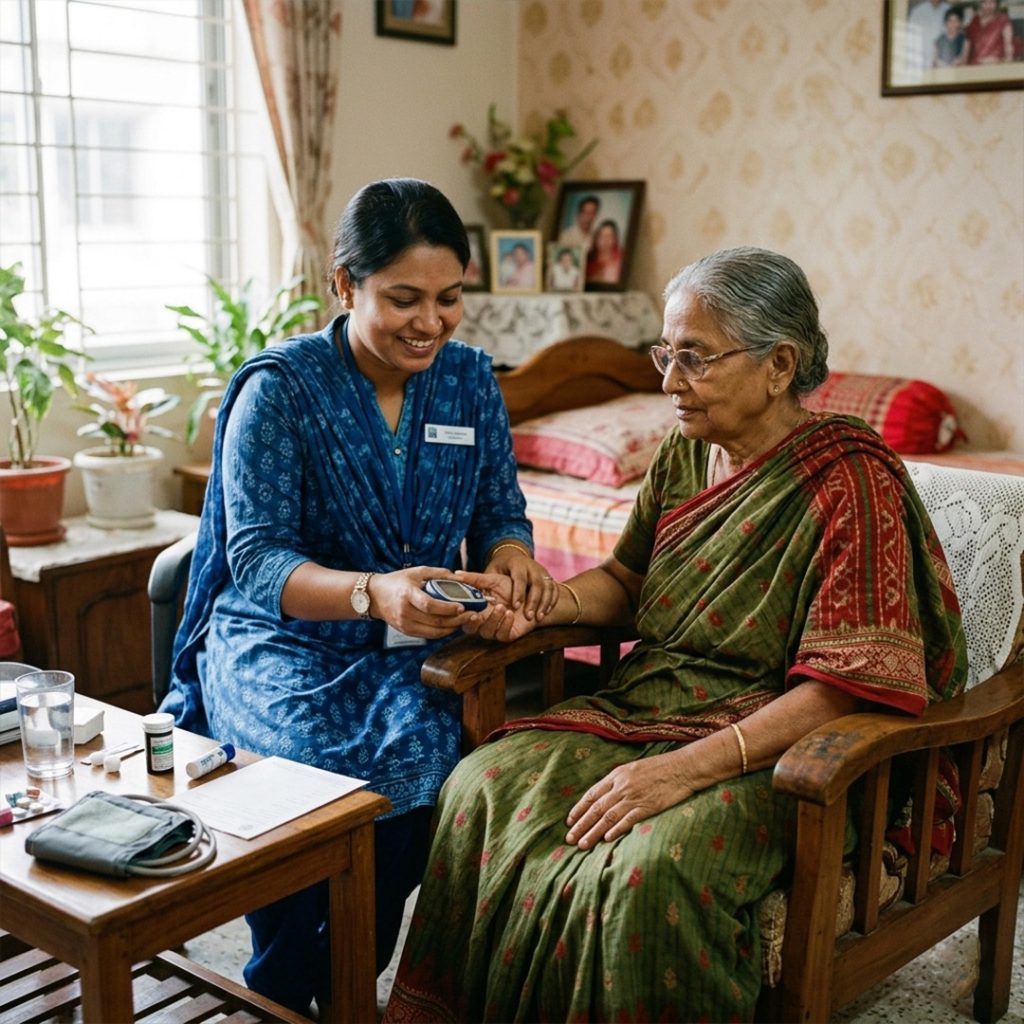
What a Professional Care Giver in Bangladesh Actually Does
Daily Personal Care
A trained caregiver handles bathing, grooming, dressing, oral hygiene, and toileting with both technical skill and personal dignity. For bedridden or mobility-limited patients, these tasks carry genuine risk if performed incorrectly. In addition, professional caregivers understand how to reposition patients to prevent pressure sores a complication that causes serious harm when overlooked.
Medication Management
Many elderly Bangladeshis manage three to six medications daily for conditions including diabetes, hypertension, heart disease, and arthritis. Missing doses or taking the wrong amount can trigger serious complications. Therefore, a caregiver’s role in tracking medication schedules, observing reactions, and communicating changes to the attending physician is clinically significant, not administrative.
Mobility and Fall Prevention
Falls rank among the leading causes of injury-related death among elderly individuals worldwide. Moreover, in Bangladesh’s home environments — where floor surfaces, stairways, and bathroom layouts often present real hazards skilled mobility support protects patients from accidents that can permanently alter their health trajectory.
Nutritional Support and Meal Preparation
Consequently, caregivers take direct responsibility for preparing meals suited to each patient’s specific medical requirements. Post-surgical patients, stroke survivors, and those with Parkinson’s disease often need feeding assistance and modified food textures. A caregiver who understands these requirements prevents malnutrition and aspiration risks simultaneously.
Emotional Companionship
Research consistently shows that loneliness accelerates cognitive decline and worsens depression among elderly and homebound individuals. As a result, the emotional dimension of caregiving — conversation, engagement, reassurance contributes directly to measurable health outcomes, not just comfort.
Health Monitoring and Observation
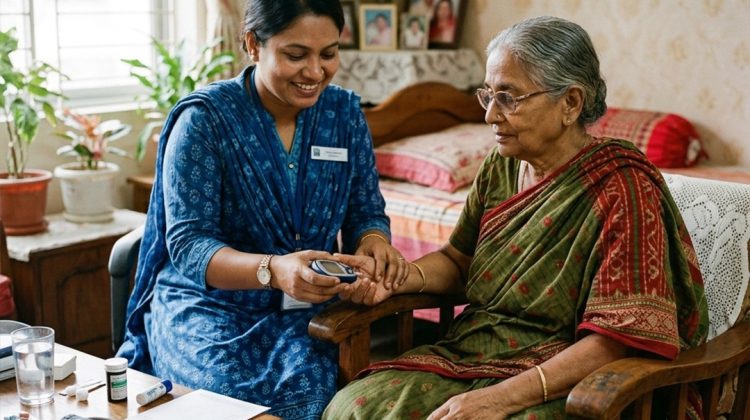
Additionally, trained caregivers track blood pressure, blood glucose, oxygen saturation, and temperature on a regular schedule. They document observations and alert family members or physicians when readings fall outside normal ranges. This early warning function prevents many emergency hospital admissions.
Types of Professional Caregiving Services Available in Bangladesh
Elderly Care at Home
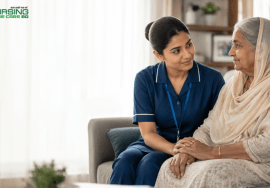
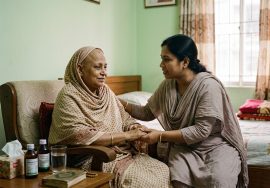
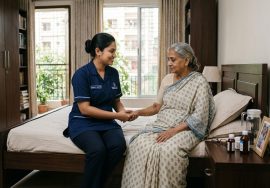
Bangladesh’s senior population is growing steadily. Elderly individuals frequently deal with multiple simultaneous conditions, reduced physical independence, early cognitive decline, and social isolation. Furthermore, geriatric home care addresses all of these dimensions together — providing daily assistance, companionship, medication management, fall prevention, and health monitoring under one structured arrangement.
Why Geriatric Home Care Outperforms Alternatives
Families who place elderly parents in residential facilities often report guilt, distance, and reduced quality of emotional connection. In contrast, home-based geriatric care keeps elderly individuals in their own environment — surrounded by familiar objects, routines, and family. Recovery outcomes improve. Emotional well-being stabilizes. Consequently, families in Dhaka who choose professional home care for elderly parents consistently report reduced anxiety about their parents’ safety and daily condition.
Post-Surgical and Medical Patient Care
After hospital discharge, the recovery period at home represents one of the most medically vulnerable phases a patient faces. Without structured monitoring, complications develop quickly. Wound infections, medication errors, respiratory deterioration, and catheter problems can each escalate within 48 hours if no one catches the early signs.
What Post-Surgical Caregiving Covers
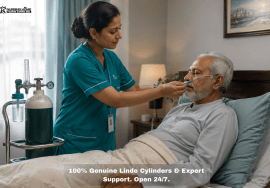
Therefore, trained home care nurses and caregivers perform post-operative wound dressing, manage catheters and feeding tubes, support respiratory care, and guide early physiotherapy exercises. They coordinate directly with the treating physician to ensure the discharge care plan is followed correctly. As a result, readmission rates drop and recovery timelines shorten meaningfully.
Newborn and Postnatal Care
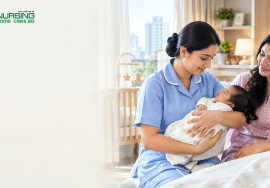
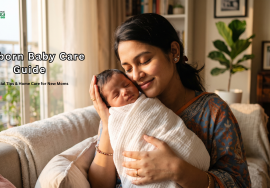
New parents, particularly mothers recovering from cesarean sections, face simultaneous physical recovery and full newborn responsibility. Professional baby care services provide 24-hour newborn supervision, feeding assistance, bathing and diapering support, sleep monitoring, and postnatal guidance. Moreover, trained baby caregivers identify early developmental concerns and guide parents on safe handling techniques. In urban areas where extended family support is limited, this service fills a gap that genuinely affects both infant safety and maternal health.
Special Needs and Disability Care
Children and adults living with autism spectrum disorder, cerebral palsy, Down syndrome, or acquired disabilities require caregivers with specific behavioral and adaptive training. Standard caregiving backgrounds do not suffice. In addition, professional special needs caregivers in Bangladesh deliver structured daily routines, sensory support, communication assistance, and therapeutic activity coordination. They work alongside families, therapists, and educators to build a consistent support environment.
How to Identify a Genuinely Professional Caregiver
Verifiable Training and Certification
First and most importantly, confirm that the caregiver holds formal training from a recognized institution. This training must cover patient handling, infection control, first aid, emergency response, and condition-specific protocols. A certificate from an unverified source means nothing without institutional backing.
Background Verification
Furthermore, no professional agency deploys a caregiver without running a thorough background check, identity verification, and reference assessment. When an agency skips this step, families carry all the risk. Given that caregivers access the home, handle medications, and work with vulnerable individuals, background verification is non-negotiable.
Health Screening
Similarly, every caregiver must clear a health screening before placement. Working with immunocompromised, elderly, or post-surgical patients while carrying an undetected communicable illness creates serious clinical danger for the patient.
Communication and Documentation Skills
Moreover, professional caregivers maintain daily care logs, record health observations, and communicate clearly with both families and medical teams. Inconsistent communication is one of the most common causes of preventable errors in home care settings. Consequently, an agency’s documentation standards reflect its overall quality.
Emotional Intelligence and Attitude
Finally, the best caregivers are calm under pressure, respectful of each patient’s dignity, and able to build genuine trust with patients and families over time. Caregiving is emotionally demanding work. Technical skill alone produces average outcomes. Technical skill combined with emotional intelligence produces exceptional ones.
Location Matters: Caregiving Across Bangladesh
Dhaka’s Specific Demands
Professional caregiving demand is highest in Dhaka, particularly across Gulshan, Banani, Dhanmondi, Mirpur, Uttara, and Bashundhara. Families here look for caregivers who understand the city’s healthcare infrastructure, which hospitals to contact in an emergency, which pharmacies are reliable at midnight, and how to navigate Dhaka’s traffic when rapid response matters.
Serving Families Beyond the Capital
Additionally, families in Chattogram, Sylhet, Rajshahi, Khulna, and Comilla increasingly search for professional caregiving services. Options outside Dhaka remain more limited, making it especially important for families in secondary cities to choose an agency with a genuine national network. Therefore, an agency’s geographic reach should factor into every hiring decision.
The Real Cost of Professional Caregiving in Bangladesh
Transparent Pricing Matters
Many families approach caregiving costs with anxiety. In practice, part-time caregiving for eight hours costs between 800 and 1,500 taka daily. Full 24-hour care ranges from 2,000 to 4,000 taka per day. Monthly packages for standard elderly or recovery care typically run between 25,000 and 60,000 taka. Specialist care for complex conditions costs more generally between 70,000 and 1,20,000 taka monthly.
Home Care vs. Hospital Stays
Furthermore, families who calculate the full cost of extended hospital stays, including bed charges, meals, transport, and lost working hours, consistently find that professional home care is more affordable overall. Beyond cost, patients heal faster at home. Familiar surroundings reduce anxiety and support emotional resilience throughout recovery. Consequently, the value of home-based professional caregiving extends well beyond the direct financial comparison.
Why Nursing Home Care BD Serves Families Across Bangladesh
Built on Qualified, Verified People
Nursing Home Care BD, operating as Care Bangla BD, places only trained, background-verified, and health-screened caregivers with families. Moreover, the agency maintains active supervision throughout every placement, not just at the point of hiring.
Personalized Care Plans for Every Patient
Furthermore, each patient receives an individual care plan built around their specific medical condition, daily routine, family preferences, and long-term goals. No two patients share identical needs, and the care plan reflects that reality from day one.
Available Around the Clock
Additionally, families can reach Nursing Home Care BD at 01719661366 at any hour, day, or night. For families managing complex medical conditions at home, this 24/7 availability is not a feature. It is a clinical necessity.
Communication Families Can Count On
Consequently, regular updates, clear reporting, and open feedback channels ensure families always know what is happening with their loved one. Transparency in communication builds the trust that makes long-term caregiving arrangements work well.
Frequently Asked Questions
Standard bookings typically result in deployment within 24 to 48 hours. Emergency arrangements move faster depending on location and availability.
Yes. Nursing Home Care BD accommodates requests for male or female caregivers based on patient comfort and cultural preference.
Reputable agencies, including Nursing Home Care BD, offer replacement arrangements. Open communication with the agency resolves concerns efficiently.
Yes, provided the caregiver holds specific dementia care training. These caregivers understand behavioral management, safety monitoring, memory support activities, and communication strategies suited to cognitive decline.
Yes. Trained caregivers operate within the care plan established by the treating physician and maintain regular communication with both the family and the medical team.
Through regular check-ins, family feedback reviews, care log assessments, and periodic evaluations of both caregiver performance and patient condition.
Making the Right Decision for Your Family
Choosing a professional caregiver in Bangladesh is one of the most consequential decisions a family can make for a vulnerable loved one. The right caregiver brings clinical competence and genuine compassion together, turning the home into an active place of healing rather than a place of worry.
Prioritize agencies that show full transparency about their hiring standards, provide clear written service agreements, maintain professional oversight after placement, and treat every patient’s dignity as the foundation of everything they do.
Bangladesh’s caregiving sector has matured considerably. Families now have real access to professionals who deliver the quality of care previously available only inside clinical settings. Choosing carefully means giving your loved one the environment they need to recover fully, age comfortably, or live with genuine joy at home.
For consultation, service details, or immediate booking, visit nursinghomecarebd.com or call 01719661366 anytime.